
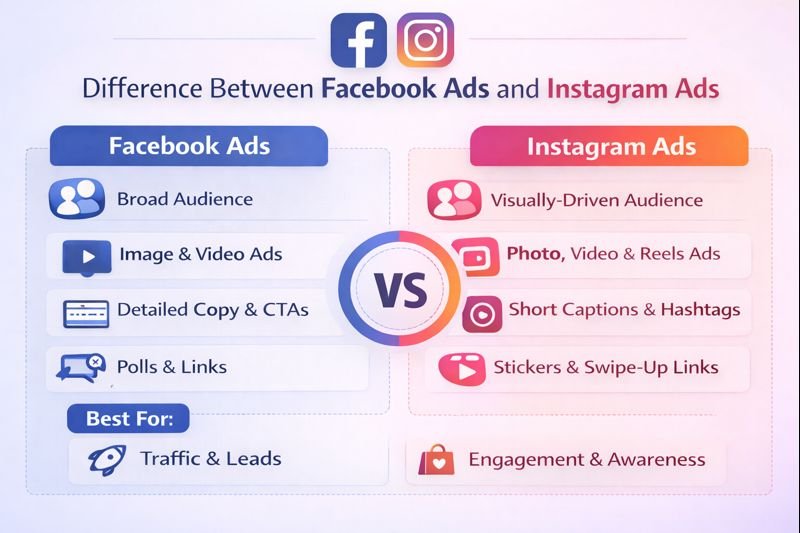
Difference Between Facebook Ads and Instagram Ads is one of the most important topics for businesses and digital marketers who want to run paid advertising effectively on Meta platforms.
Although Facebook Ads and Instagram Ads are managed through the same advertising system, their audience behavior, content style, cost structure, and performance outcomes are very different. Choosing the wrong platform can waste budget, while choosing the right one can significantly increase conversions and ROI.
In this guide, you will clearly understand the difference between Facebook Ads and Instagram Ads, along with practical insights to decide which platform suits your business goals best.
1. Overview of Facebook Ads and Instagram Ads
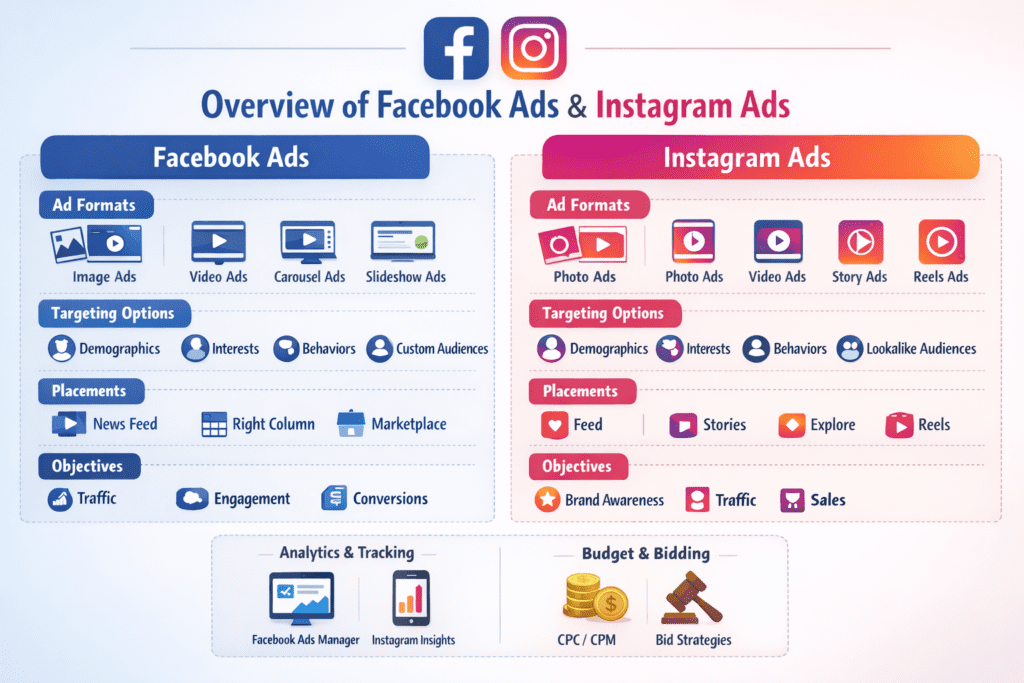
Facebook Ads are paid advertisements shown across Facebook’s ecosystem, including news feed, stories, marketplace, and messenger. These ads are widely used for lead generation, website traffic, app installs, and conversions.
Instagram Ads, on the other hand, are visually focused ads displayed on Instagram feeds, stories, reels, and explore pages. They are designed for brand awareness, engagement, and lifestyle-driven purchases.
The core difference between Facebook Ads and Instagram Ads starts with how users interact with content on each platform.
2. Difference Between Facebook Ads and Instagram Ads in Audience
Facebook Ads Audience
Facebook attracts a broad and mature audience. Most users are aged 25 to 55+, including professionals, parents, business owners, and decision-makers. Users typically browse Facebook to read posts, join communities, and research products or services.
Instagram Ads Audience
Instagram is dominated by a younger demographic, mainly 18 to 34 years old. Users are highly visual, trend-focused, and influenced by creators and brands. Purchases are often driven by emotion and aesthetics.
Key Audience Difference
The difference between Facebook Ads and Instagram Ads here is intent:
- Facebook users are information-driven
- Instagram users are emotion-driven
3. Difference Between Facebook Ads and Instagram Ads in Content Style
Facebook Ads support longer text, detailed descriptions, and educational content. Businesses can explain offers, benefits, testimonials, and features in depth.
Instagram Ads rely heavily on visual storytelling. Images, short videos, reels, and stories perform best. Captions are short, and visuals must grab attention instantly.
This content style difference means Facebook Ads work better for explaining solutions, while Instagram Ads work better for inspiring action.
4. Difference Between Facebook Ads and Instagram Ads in Ad Formats
Facebook Ad Formats
- Image ads
- Video ads
- Carousel ads
- Lead ads
- Collection ads
- Event response ads
Instagram Ad Formats
- Feed image ads
- Feed video ads
- Story ads
- Reel ads
- Explore ads
The difference between Facebook Ads and Instagram Ads is flexibility. Facebook offers more placement and format diversity, while Instagram prioritizes immersive visual formats.
5. Difference Between Facebook Ads and Instagram Ads in Targeting
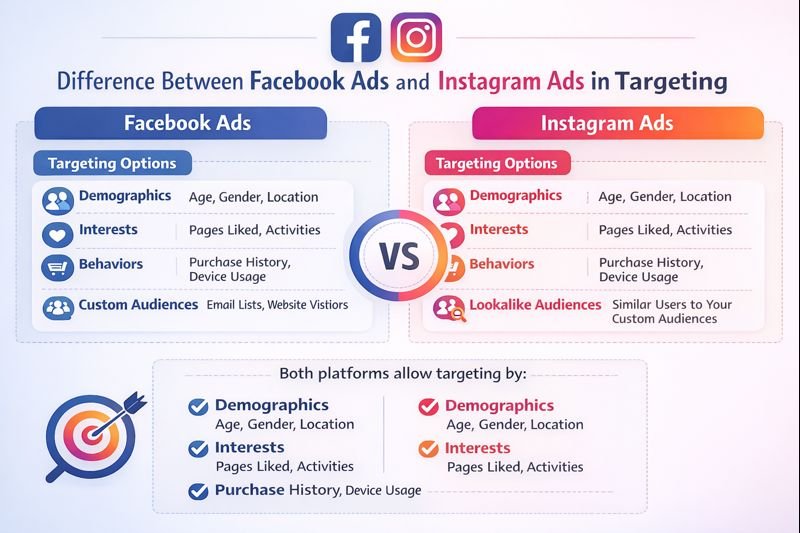
Both platforms use Meta’s advanced targeting system, allowing advertisers to target users based on:
- Demographics
- Interests
- Behaviors
- Custom audiences
- Lookalike audiences
However, Facebook targeting performs better for detailed segmentation, such as job roles, life events, and long-term interests. Instagram targeting works better for interest-based discovery and engagement.
https://www.facebook.com/business/learn
6. Difference Between Facebook Ads and Instagram Ads in Cost & CPC
Cost is a major deciding factor when comparing platforms.
Generally:
- Facebook Ads have lower CPC and CPM
- Instagram Ads are more expensive due to high competition
Facebook Ads often deliver better cost-per-lead and cost-per-conversion, especially for service-based businesses. Instagram Ads may cost more but provide stronger brand recall.
Thus, the difference between Facebook Ads and Instagram Ads in cost depends on campaign objective.
7. Difference Between Facebook Ads and Instagram Ads in Engagement
Instagram Ads usually receive:
- More likes
- More shares
- Higher story interactions
Facebook Ads receive:
- More link clicks
- More comments
- Higher conversion intent
This means Instagram Ads are better for top-of-funnel engagement, while Facebook Ads are better for bottom-of-funnel actions.
8. Difference Between Facebook Ads and Instagram Ads for Business Goals
Facebook Ads Are Best For:
- Lead generation
- Website traffic
- Local businesses
- B2B marketing
- High-ticket services
Instagram Ads Are Best For:
- E-commerce brands
- Fashion and beauty
- Cafes and restaurants
- Influencers
- Lifestyle products
Understanding this difference between Facebook Ads and Instagram Ads helps align ads with business goals.
9. Difference Between Facebook Ads and Instagram Ads in ROI
Facebook Ads generally deliver higher ROI for conversion-focused campaigns due to detailed targeting and retargeting capabilities.
Instagram Ads deliver higher engagement ROI, improving brand visibility, awareness, and trust over time.
For long-term growth, many marketers use Instagram Ads for awareness and Facebook Ads for conversion.
10. Facebook Ads vs Instagram Ads: Which One Should You Choose?
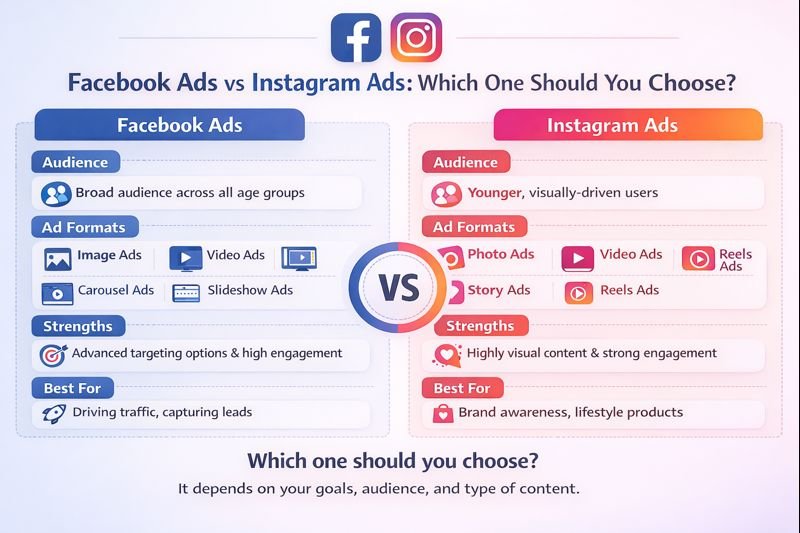
Choose Facebook Ads if your goal is:
- Generating leads
- Driving website traffic
- Getting direct sales
Choose Instagram Ads if your goal is:
- Building a brand
- Increasing engagement
- Promoting visual products
There is no single winner. The difference between Facebook Ads and Instagram Ads lies in how they support different stages of the marketing funnel.
11. Using Facebook Ads and Instagram Ads Together
The most effective strategy is running ads on both platforms together. This allows:
- Wider reach
- Better retargeting
- Lower overall cost per acquisition
- Cross-platform brand consistency
Meta’s ad system automatically optimizes placements to deliver better performance when both platforms are used.
12. Final Conclusion
The difference between Facebook Ads and Instagram Ads is not about which platform is better, but about which platform is right for your objective.
Facebook Ads excel in conversions, lead generation, and detailed targeting. Instagram Ads shine in engagement, visual appeal, and brand awareness.
For best results, smart marketers combine both platforms and let data guide optimization.
13. Difference Between Facebook Ads and Instagram Ads in User Behavior & Intent
Another important difference between Facebook Ads and Instagram Ads lies in how users behave on each platform.
Facebook users generally scroll with a purpose. They read posts, click links, join groups, and explore detailed information before taking action. This makes Facebook Ads highly effective for problem-aware audiences who are actively looking for solutions, services, or offers.
Instagram users, however, scroll for inspiration, entertainment, and trends. Their buying decisions are often impulse-driven. A visually appealing ad can instantly trigger interest, even if the user was not planning to buy.
Because of this behavioral difference, Facebook Ads perform better for planned purchases, while Instagram Ads perform better for discovery-based purchases.
14. Difference Between Facebook Ads and Instagram Ads in Creative Strategy
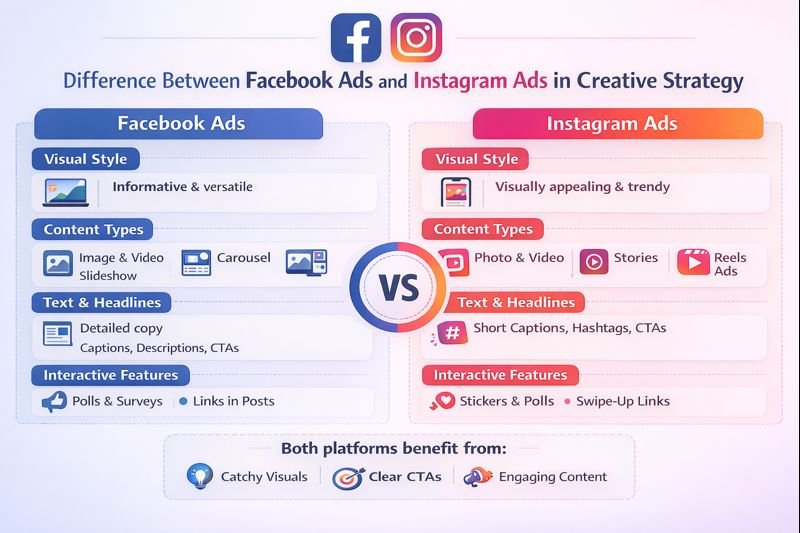
Creative strategy plays a crucial role in ad performance.
Facebook Ads allow brands to test:
- Longer ad copy
- Headlines with benefits
- Testimonials and reviews
- Problem–solution messaging
Instagram Ads require:
- High-quality visuals
- Minimal text
- Strong first 3 seconds (especially for reels and stories)
- Emotionally appealing content
The difference between Facebook Ads and Instagram Ads here is depth versus impact. Facebook Ads focus on clarity and explanation, while Instagram Ads focus on attention and attraction.
15. Difference Between Facebook Ads and Instagram Ads for Different Industries
The effectiveness of each platform also varies by industry.
Facebook Ads perform exceptionally well for:
- Education & coaching
- Real estate
- Finance & insurance
- Digital services
- SaaS products
Instagram Ads perform exceptionally well for:
- Fashion & apparel
- Beauty & skincare
- Food & beverages
- Travel & lifestyle
- Fitness & wellness brands
Understanding this industry-wise difference between Facebook Ads and Instagram Ads helps businesses avoid unnecessary ad spend and focus on the right platform.
16. Difference Between Facebook Ads and Instagram Ads in Algorithm Optimization
Both platforms run on Meta’s advertising algorithm, but optimization signals differ slightly.
Facebook Ads optimize strongly based on:
- Link clicks
- Landing page behavior
- Conversion events
- Retargeting signals
Instagram Ads optimize strongly based on:
- Engagement (likes, shares, saves)
- Video watch time
- Story interactions
- Reel completion rate
This means advertisers must optimize creatives differently for each platform, even when running ads from the same campaign.
17. Common Mistakes Marketers Make When Comparing Facebook Ads and Instagram Ads
Many marketers fail to get results because they misunderstand the difference between Facebook Ads and Instagram Ads.
Common mistakes include:
- Using the same creatives on both platforms
- Expecting instant sales from Instagram Ads
- Writing long captions for Instagram Ads
- Ignoring visuals in Facebook Ads
- Not tracking conversions separately
Avoiding these mistakes can significantly improve performance on both platforms.
18. Future of Facebook Ads vs Instagram Ads
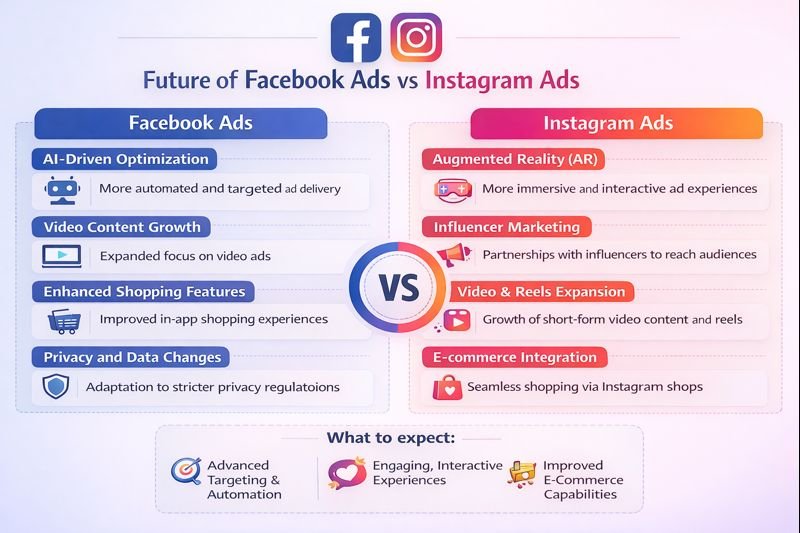
Looking ahead, both platforms will continue to evolve, but their core strengths will remain.
Facebook Ads will stay strong for:
- Data-driven advertising
- Retargeting
- Lead-based campaigns
- Performance marketing
Instagram Ads will continue to dominate:
- Short-form video ads
- Influencer-style promotions
- Visual branding
- Mobile-first commerce
Marketers who understand this long-term difference between Facebook Ads and Instagram Ads will stay ahead of the competition.
Expanded Final Conclusion
The difference between Facebook Ads and Instagram Ads is deeper than just placements or visuals. It includes user intent, content strategy, cost behavior, engagement patterns, and conversion flow.
Facebook Ads are best when your audience needs education, trust, and reassurance before buying. Instagram Ads are best when your audience responds to visuals, emotions, and lifestyle appeal.
The smartest strategy is not choosing one platform over the other, but using both together in a balanced funnel—Instagram Ads for awareness and engagement, and Facebook Ads for retargeting and conversions.
When used strategically, Facebook Ads and Instagram Ads become a powerful growth engine for any business.
How Facebook Ads Work: A Complete Guide for Businesses and Marketers click now.
Leave a Reply